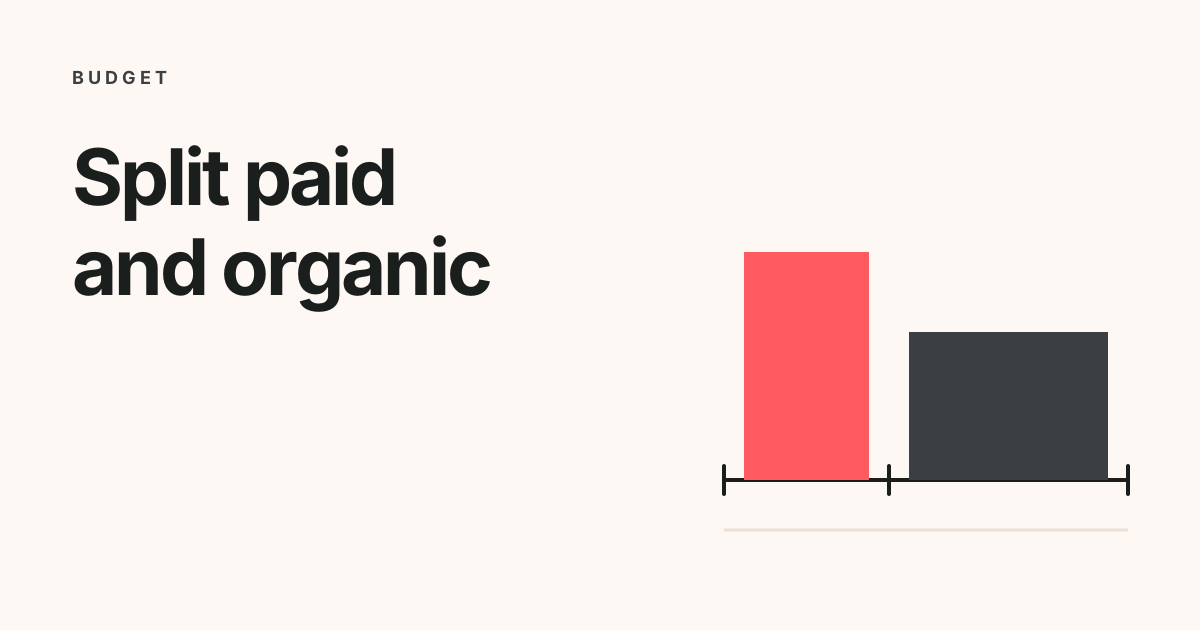
Short answer: fund paid media with the budget that must produce enquiries this quarter, and fund organic with the budget you can leave alone for two or three quarters. Trying to make either channel do the other's job is where most budgets get wasted.
They are not substitutes
Paid media is a tap. Turn it on, demand arrives; turn it off, it stops the same day. That is a feature when you need predictability and a liability when the cost per enquiry rises faster than your margin.
Organic content is an asset. It costs more before it returns anything, and it keeps returning after you stop paying. It also degrades quietly if nobody maintains it.
Three questions that set the split
- How long is the sales cycle? A six-month cycle means organic work started today pays inside the same horizon as paid.
- What is the margin per customer? Thin margins rarely survive an auction against better-funded competitors.
- How many months of runway are there? If the answer is under six, the split leans paid regardless of what is theoretically optimal.
A starting point, not a rule
For a service business with a working website and no content library, starting near seventy percent paid and thirty percent organic is defensible, then shifting ten points a quarter toward organic as pages begin to earn traffic.
The trigger for shifting is evidence: a page that produced enquiries without media support. Until that exists, organic is a hypothesis, not a channel.
Do not fund paid into a broken page
The fastest way to waste both budgets is to send paid traffic to a page that does not convert. Before increasing spend, work through the landing page conversion checklist. A page that converts at three percent instead of one makes every subsequent budget decision easier.
Make the comparison honest
Comparing channels requires the same definition of success on both sides. One key event, consistent parameters, and campaign source carried through to the enquiry: GA4 events for lead generation.
Attribution will never be perfect, and it gets harder as third-party cookies disappear. Read measurement without third-party cookies before rebuilding your reporting around a number that is quietly drifting.
Review quarterly, not monthly
Organic moves on a scale of months. A monthly review encourages cutting exactly the work that was about to pay off. Set a quarterly review, agree in advance what evidence would move budget, and hold the line in between.
Want a second opinion on the split before the next planning cycle? Book a fit call.